According to its corporate mission statement, Google is a search engine company pursuing the lofty goal of organizing the world's information [source: Google]. It's famous for fostering innovation in computer programming. The Googleplex, Google's corporate headquarters, reflects the company's values by providing employees a technologically advanced workplace designed with collaboration in mind. And now, Google is expanding its presence beyond Earth itself: Google is going to the moon. To understand how and why Google is doing this, let's take a quick look at past explorations.
On Jan. 2, 1959, the Luna 1 spacecraft launched from the then-Soviet Union. It escaped Earth's gravity and passed by the moon. Along the way, it used several instruments to collect measurements on its journey. Among the data sent back to Earth was the revelation that the moon has no magnetic field. Luna 1's launch marked the beginning of mankind's attempts to study the moon through space travel.
Ten years later, the Apollo 11 spacecraft touched down on the moon's surface. This marked the first time humans set foot on the moon. Astronauts Neil Armstrong and Buzz Aldrin explored the moon's surface, conducted experiments and collected samples of lunar material.
Over the next several decades, there would be more missions -- manned and unmanned -- to the moon. Gradually, people began to look beyond the moon to other bodies in our solar system. Interest in lunar exploration began to fade. But in 2006, NASA announced a new plan to send astronauts to the moon again by 2020 [source: NASA]. As a result, interest in the lunar landscape is on the rise.
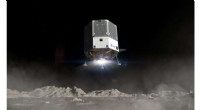
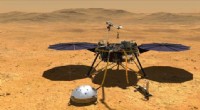
This brings us to Google, a company that prides itself on being at the forefront of gathering and organizing information. Google is sponsoring a competition called the Lunar X Prize. The competition is open to privately funded groups. The groups are charged with a task that's easy to describe, but very hard to achieve. They must launch a vehicle that can journey to the moon, land safely on its surface and deploy a mobile robotic device. The winner could receive more than $20 million. Several teams have already joined the competition. The race is on!
How do teams qualify to enter the Lunar X Prize competition? Keep reading to find out.
The X FactorGoogle partnered with the X Prize Foundation, which is a nonprofit organization that promotes innovation. The foundation formed in 1996 when a group of space enthusiasts offered a $10 million prize to any private team that could build and fly a vehicle into suborbital altitudes and return safely. In 2004, the creators of SpaceShipOne were able to claim the prize money after successfully meeting the challenge.
ContentsWhat does it take to compete for the Lunar X Prize? Google and the X Prize Foundation have outlined several qualifications teams must meet if they wish to win:
Once Google and the X Prize Foundation finalize the rules and the teams agree to them, the game is on. What does a team have to do to win the prize? Keep reading to find out.
I Won $20 Million U.S. and All I have is a Massive DebtCould a team win first prize and still end up in a financial deficit? It's quite possible. Teams may have to spend more money than they could possibly win in order to accomplish the competition's goals. That's not unusual, though. Even early aeronautical contests at the dawn of the age of flight saw teams spend significantly more money than they could earn from a clean win.
In order to win the full Lunar X Prize, a team must be the first to complete the following tasks:
If a team's vehicle can accomplish the above goals, the team will win the grand prize: $20 million. There's also a second prize of $5 million. The second prize provide incentive so that teams will continue to try and achieve their goals even if another team grabs first prize. Google and the X Prize Foundation may award the second prize to a team that accomplishes some, but not all, of the goals listed above. For example, should the first team to successfully land a vehicle on the moon discover the vehicle can't travel the full 500 meters required to win first prize, it may be eligible for second place.
In addition to the conditions listed above, there are several bonus objectives teams can attempt. Each bonus objective will earn the winning team a prize. At the moment, the collective prize amount for the bonus objectives is $5 million. The heritage bonus prize awards teams that use their vehicles to capture photos and video of historic artifacts on the moon. In order to pursue this prize, the respective teams must secure permission and cooperation with Google and the X Prize Foundation. Teams that can pilot their vehicles to a distance of at least 5 kilometers can win the range bonus. A vehicle that can survive and remain operational for two full lunar days -- about 58 Earth days total -- is eligible for the survival bonus. The team that has the most diversity within its membership can win a diversity bonus. And finally, should a vehicle detect any evidence that there may have been water on the moon, the responsible team will win the water detection bonus prize.
Google says it will continue to tweak and adjust the qualifications and rules of the game up until January 2009, when it will present the finalized guidelines to all participating teams.
Who are the competing teams? Find out in the next section.
The Clock is TickingIn order to collect the $20 million first prize, the winning team must complete all the parameters for a successful attempt before Dec. 31, 2012. On Jan. 1, 2013, first prize reduces to $15 million until Dec. 31, 2014. At that time, the contest will either end or Google and the X Prize Foundation may elect to extend the competition.
 Courtesy Google
As of this writing, there are 13 teams competing for the Google Lunar X Prize. The first team to officially join the competition is Odyssey Moon. Odyssey Moon completed its registration process in December 2007. Its headquarters are on the Isle of Man, which is in the Irish Sea and is part of the United Kingdom. The team leaders include Bob Richards, once a student of famed astronomer Carl Sagan, and Ramin Khadem, the chief financial officer (CFO) of a satellite-provider company called Inmarsat.
Khadem claims that competing will be rewarding on its own even if Odyssey Moon doesn't win first prize [source: Wired]. That's quite possible, as teams may develop new technologies and processes that will become standard for space travel in the future. Also, competing can help boost an organization's reputation within the scientific community.
The other 12 teams in the competition include:
Why are these teams competing for this prize? Most of them cite a love of discovery, innovation and competition. While every team wishes to be the first to fulfill the competition's requirements, most say the prize money isn't the most important incentive. Instead, the teams wish to promote exploration, create new technologies to aid future endeavors and continue the process of privatizing space travel. Through competitions like the X Prize, these teams hope to lead the way in building a new aerospace industry -- one that doesn't have to rely upon public funds.
Why does the Google Lunar X Prize even exist, and how could it affect the way we explore space? Find out in the next section.
No Employees AllowedX Prize Foundation employees and their family members are not allowed to participate in the competition or invest in any team's venture.
 NASA Deputy Administrator Shana Dale affirms the space agency's support for the Google Lunar X Prize competition. Dale pointed out that the contest would not only foster innovation, but also encourage children to become interested in space exploration.
Courtesy Google
NASA Deputy Administrator Shana Dale affirms the space agency's support for the Google Lunar X Prize competition. Dale pointed out that the contest would not only foster innovation, but also encourage children to become interested in space exploration.
Courtesy GoogleFor several decades, only the governments of a few countries got involved in the field of space exploration. Private companies developed many of the technologies used in various space programs. But government agencies were the only groups organizing and executing missions.
The Lunar X Prize is an attempt to encourage a private space exploration industry. Why privatize space exploration? One of the reasons is that privatization promotes competition. With a publically funded program, the administering organization might consider bids from various companies when deciding upon technologies and equipment. Ultimately, only a few private companies will get to produce the equipment used in a mission.
A privatized space industry is a different story. Competing technology companies can participate. It's a huge public relations boost when a company's products contribute to a team winning the X Prize. And because multiple technologies from different companies are involved, it becomes possible to compare different approaches and see what works best.
Another reason to promote a private space industry has to do with costs. Publically funded organizations have to adhere to strict budgets. Sometimes this means a government-funded space organization has to abandon plans if the cost is too much. For example, NASA considered abandoning the Hubble Space Telescope when the projected costs of a roboticrepair mission climbed too high. A privatized approach means that each individual, company or organization involved must determine its own spending limits. The consideration shifts from an agreed-upon budget to a comparison of risk versus reward.
The competition's administrators say that they want to promote space travel in a way that engages and excites young people. The future of the space industry depends upon young people getting interested in the field. For that reason, a big part of the competition involves reaching out to educational facilities and allowing students the opportunity to interact with the various teams. By bringing space exploration into the classroom, the administrators hope to inspire the next generation of engineers and astronauts.
 One of the goals of the Lunar X Prize competition is to raise interest in space exploration and education.
Courtesy Google
One of the goals of the Lunar X Prize competition is to raise interest in space exploration and education.
Courtesy GoogleGoogle and the X Prize Foundation also hope that as companies develop new technologies, the price of space exploration will decrease. Since each team must share its approach with the public, future engineers will be able to see which methods are best suited for space exploration. In effect, the Lunar X Prize is a massive research and development project.
Finally, the Lunar X Prize could help establish the moon as a legitimate launching point for future space missions. NASA plans to establish a lunar base by the middle of the century. A base on the moon could serve as the staging ground for missions to more distant destinations, like Mars. Some people believe the moon could harvest energy we could use back here on Earth. The Lunar X Prize helps draw attention (and perhaps funding) to other moon missions.
Want to learn more about the moon and space travel? Blast off to the next page to explore some great links.
To the Moon, AliceThe competition prize money comes from the donations of many benefactors, whether they are individuals, companies or other organizations. With a donation of $25,000 or more, Google and the X Prize Foundation will put the benefactor's name on a plaque. But getting a look at the plaque will require a bit of a trip -- the winning team will transport the plaque to the moon's surface.