Instead, we need to think about what "orbit" *means* and then understand its implications. Here's how we can break it down:
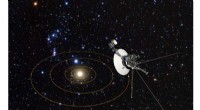
1. Orbit as a physical phenomenon: Orbit describes the curved path an object takes around another object due to gravity. This is a fundamental concept in physics and astronomy.
2. Orbit as a tool for achieving a goal: We use orbits for various purposes, but the two most fundamental are:
a) Space Exploration and Observation: Orbits allow us to:
* Explore other celestial bodies: Sending spacecraft into orbit around planets, moons, asteroids, etc., allows for close observation and study.
* Observe Earth: Earth observation satellites in various orbits gather data about the planet's atmosphere, oceans, land, and more.
* Communicate: Communication satellites in geostationary orbit relay signals for television, internet, and other communication services.
b) Strategic Positioning: Orbits are crucial for:
* Military Operations: Spy satellites and reconnaissance aircraft use orbits to monitor potential threats.
* Navigation and Timing: Global Positioning System (GPS) satellites in orbit enable precise navigation and timekeeping.
* Scientific Research: Research satellites in orbit allow for observations of the Sun, distant galaxies, and other celestial phenomena.
Therefore, it's not that orbits have "functions" per se, but rather that we use orbits as a tool to accomplish these various goals.