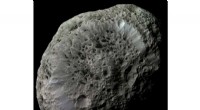
* Orbiting the Sun: Both Eris and Pluto orbit the Sun, but not within the classical definition of a planet.
* Size: Both are relatively small compared to the eight major planets. Eris is actually slightly larger than Pluto, though Pluto has a greater mass.
* Composition: Both are primarily composed of rock and ice, with a thin atmosphere.
* Presence of Moons: Both have moons. Pluto has five known moons, while Eris has one.
* Highly Elliptical Orbits: Both have orbits that are much more eccentric than the planets, meaning they are much more oval-shaped.
Here's a table summarizing the similarities:
| Feature | Eris | Pluto |
|---|---|---|
| Type | Dwarf planet | Dwarf planet |
| Orbit | Around the Sun | Around the Sun |
| Size | Slightly larger than Pluto | Smaller than Eris |
| Composition | Rock and ice | Rock and ice |
| Moons | One (Dysnomia) | Five (Charon, Styx, Nix, Kerberos, Hydra) |
| Orbit shape | Highly elliptical | Highly elliptical |
Differences:
* Location: Eris is located in the Kuiper Belt, while Pluto is classified as a trans-Neptunian object.
* Surface Composition: Eris is covered in a layer of nitrogen, methane, and possibly carbon monoxide, while Pluto has a more diverse surface with regions of nitrogen, methane, and carbon monoxide ice.
* Surface Features: Eris has a smooth, featureless surface, while Pluto has a variety of surface features, including mountains, plains, and craters.
While both Eris and Pluto are considered dwarf planets, they have unique characteristics that distinguish them from each other.