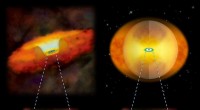
The Core:
* Neutron Star: If the star's core is between 1.4 and 3 times the mass of our Sun, it will collapse into an incredibly dense ball of neutrons called a neutron star. These stars are only about 20 kilometers in diameter, but pack the mass of our Sun!
* Black Hole: If the core's mass is greater than 3 times the mass of our Sun, it will continue collapsing indefinitely, becoming a black hole. Black holes are regions of spacetime where gravity is so strong that nothing, not even light, can escape.
The Expanding Shell:
* Heavy Elements: The supernova explosion throws off the star's outer layers into space at incredibly high speeds. This material contains a wide range of elements, including many heavier elements like iron, gold, silver, and uranium. These elements are forged in the intense heat and pressure of the supernova explosion.
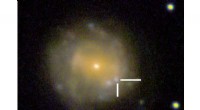
* Supernova Remnant: The expanding material from the explosion forms a cloud of gas and dust called a supernova remnant. These remnants can be visible for thousands of years and are important sources of energy and new elements in the galaxy.
In summary, a supernova leaves behind a neutron star or a black hole at its core and throws off heavy elements into space, enriching the interstellar medium and providing the building blocks for future stars and planets.