Solar Systems:
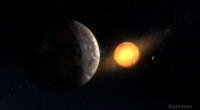
* Planets orbit a star, like Earth orbits the Sun.
* This star, along with its planets, asteroids, comets, and dust, forms a solar system.
* Our solar system is just one among billions in the Milky Way galaxy.
Galaxies:
* Solar systems are part of larger groupings called galaxies.
* Galaxies contain billions of stars, planets, gas, and dust.
* The Milky Way galaxy, our home, is a spiral galaxy.
* Galaxies can interact with each other, sometimes colliding.
Galaxy Clusters and Superclusters:
* Galaxies aren't scattered randomly; they tend to cluster together.
* Galaxy clusters are collections of hundreds or thousands of galaxies.
* Clusters can form even larger structures called superclusters.
* Our Milky Way galaxy belongs to the Local Group, a small cluster of galaxies, which in turn is part of the Virgo Supercluster.
The Universe:
* The universe is the ultimate system, encompassing all of space and time, including everything in it – galaxies, stars, planets, and all matter and energy.
* We still have much to learn about the universe's origins, structure, and evolution.
This hierarchical structure helps us understand our place within the vast and complex cosmos.