1. Discovery of Uranus: He is most famous for discovering the planet Uranus in 1781, expanding our understanding of the solar system and pushing the boundaries of known space.
2. Infrared Radiation: Herschel's experiments with sunlight and thermometers led him to discover infrared radiation, an invisible form of light that we can't see with the naked eye. This discovery paved the way for advancements in spectroscopy and our understanding of light.
3. Stellar Astronomy: Herschel conducted extensive studies of the Milky Way, mapping its structure and discovering its spiral shape. He developed a method to determine the relative distances of stars, laying the foundation for modern stellar astronomy.
4. Telescope Building: Herschel was a skilled telescope maker, building some of the largest and most powerful telescopes of his time. His innovative designs, including the use of large, polished mirrors, greatly improved the ability to observe celestial objects.
5. Binary Stars: Herschel observed and catalogued numerous binary star systems, demonstrating that stars are not solitary objects but can be gravitationally bound in pairs. This helped to understand the dynamics of stars and their evolution.
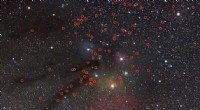
6. Nebulae: Herschel extensively studied nebulae, celestial objects that appeared fuzzy and cloud-like through telescopes. He categorized them into different types, contributing to our understanding of star formation and interstellar gas.
7. Cataloging: Herschel meticulously cataloged thousands of stars and nebulae, providing a valuable resource for future astronomers.
In conclusion, William Herschel was a visionary astronomer whose discoveries and contributions significantly advanced our understanding of the universe and paved the way for future astronomical research. His work continues to be relevant and influential even today.