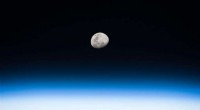
* Light Pollution: The atmosphere scatters light from cities and other artificial sources, making it difficult to see faint objects in space.
* Turbulence: The atmosphere is constantly moving, causing stars to twinkle and blurring images. This effect, known as atmospheric seeing, limits the resolution of ground-based telescopes.
* Absorption: Certain wavelengths of light, like infrared and ultraviolet, are absorbed by the atmosphere, preventing them from reaching ground-based telescopes.
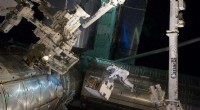
Space telescopes, on the other hand, operate above the atmosphere, eliminating these issues and allowing for:
* Sharper images: Unhindered by atmospheric turbulence, they can capture much clearer and detailed images of celestial objects.
* Observation of all wavelengths: Space telescopes can observe all wavelengths of light, including infrared, ultraviolet, and X-rays, which are blocked by the Earth's atmosphere.
* No light pollution: They are far from the light pollution of Earth, enabling them to see fainter objects.
Therefore, the Earth's atmosphere poses a significant obstacle to astronomical observations from the ground, highlighting the advantage of placing telescopes in space.