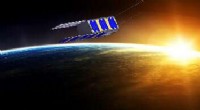
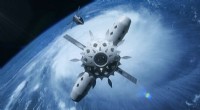
* Atmospheric Distortion: Earth's atmosphere causes twinkling and blurring of light, which can distort astronomical observations. This is particularly noticeable for visible light and ultraviolet radiation. Space telescopes, above the atmosphere, are free from this distortion.
* Limited Wavelengths: The atmosphere absorbs certain wavelengths of light, such as infrared and X-rays, preventing them from reaching Earth-based telescopes. Space telescopes can observe these wavelengths freely.
* Weather and Light Pollution: Cloud cover, rain, and light pollution from cities can interrupt observations made by Earth-based telescopes. Space telescopes are unaffected by these factors.
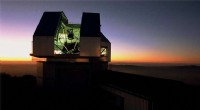
* Accessibility and Maintenance: Earth-based telescopes are limited to specific locations, often in remote areas with clear skies. Space telescopes are more accessible and can be placed in orbits that allow for constant observation of various regions of space. However, they are much harder to maintain and repair.
Overall, space telescopes offer a superior vantage point for astronomical observations due to their location above the Earth's atmosphere.