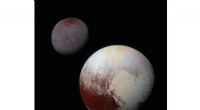
Here are the shapes of the eight planets in our solar system:
* Mercury: Approximately spherical, with a slight bulge at the equator due to its rotation.
* Venus: Approximately spherical, with a very slight bulge at the equator.
* Earth: Approximately spherical, with a slight bulge at the equator due to its rotation.
* Mars: Approximately spherical, with a slight bulge at the equator.
* Jupiter: A gas giant with a flattened shape, meaning it's wider at the equator than it is from pole to pole.
* Saturn: A gas giant with a flattened shape, even more pronounced than Jupiter due to its rapid rotation.
* Uranus: An ice giant with a flattened shape, and a noticeable tilt on its axis.
* Neptune: An ice giant with a flattened shape, similar to Uranus.
It's worth noting that all planets are not perfectly spherical. They all have some degree of flattening due to their rotation. However, they are all very close to being spherical in shape.