Here's a breakdown of the theory:
1. Dust and Gas Disk: A protoplanetary disk, composed of dust and gas, forms around a young star.
2. Planetesimal Formation: Within this disk, dust particles collide and stick together, gradually growing into larger aggregates called planetesimals. These planetesimals can range in size from pebbles to small asteroids.
3. Gravitational Growth: As planetesimals continue to collide and grow, their gravitational influence increases. This allows them to attract more particles and planetesimals, leading to further growth.
4. Runaway Growth: Eventually, the largest planetesimals gain a significant gravitational advantage. They "run away" in terms of growth, accreting material at a much faster rate than the smaller ones.
5. Planet Formation: Over time, these larger planetesimals, now called protoplanets, continue to grow and sweep up remaining material in their orbits, ultimately forming planets.
Key Points:
* Gravitational Accretion: The process is driven by gravity, which allows planetesimals to attract and capture more material.
* Collisions: Collisions play a crucial role in both the initial formation of planetesimals and their subsequent growth. Some collisions are destructive, while others lead to accretion.
* Differentiation: As planets grow, their internal structure can become differentiated, with denser materials sinking towards the core and lighter materials rising to the surface.
* Gas Giant Formation: This theory also explains the formation of gas giants. In regions of the protoplanetary disk where gas is more abundant, protoplanets can accrete large amounts of gas alongside solid material, forming gas giants like Jupiter and Saturn.
Evidence:
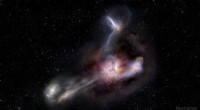
* Observations of protoplanetary disks reveal the presence of dust and gas, as well as evidence of planetesimal formation.
* Studies of meteorite compositions provide insights into the early stages of planet formation.
* Computer simulations have been developed to model the processes involved in the colliding planetesimals theory.
Overall, the colliding planetesimals theory is a well-supported model for the formation of planets. It explains the observed properties of planets in our solar system and provides a framework for understanding planet formation in other planetary systems.