Here's why:
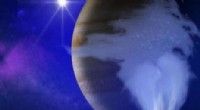
* Celestial bodies don't emit their own light. They reflect the light from a source, typically a star like our Sun.
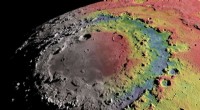
* The reflected light is what we see. When we look at the Moon, we are seeing sunlight that has bounced off its surface.
* The color and brightness of the reflected light depend on the composition and surface properties of the celestial body. For example, the Moon appears pale gray because its surface reflects most wavelengths of light equally. Venus appears bright white because its thick atmosphere reflects sunlight very efficiently.
So, while we often talk about "reflected light," the term "light" itself accurately describes the phenomenon we see.