When:
* About 13.8 billion years ago
How:
1. Singularity: It all started with an incredibly dense and hot point called a singularity. We don't fully understand what existed before this point.
2. Inflation: In a fraction of a second, the singularity rapidly expanded and inflated at an unimaginable rate, creating a vast space and cooling down. This is called cosmic inflation.
3. Particle Formation: As the universe cooled, fundamental particles like quarks and leptons started forming.
4. Nucleosynthesis: Within the first few minutes, protons and neutrons combined to form the first light elements: hydrogen, helium, and lithium.
5. Cooling and Expansion: The universe continued to expand and cool, eventually becoming transparent to radiation.
6. Formation of Stars and Galaxies: Over billions of years, gravity drew together clouds of gas and dust, forming stars and galaxies.
Evidence for the Big Bang:
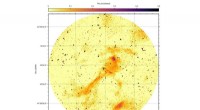
* Cosmic Microwave Background Radiation: This faint afterglow of the Big Bang is detected all over the universe.
* Red Shift of Galaxies: Galaxies are moving away from us, which supports the idea of an expanding universe.
* Abundance of Light Elements: The observed abundance of elements like hydrogen and helium aligns with the Big Bang model.
Important Note: The Big Bang theory is constantly being refined as scientists gather more data and make new discoveries. We still have much to learn about the universe's origins and evolution.