Similarities:
* Both gather light: Both types of telescopes use lenses or mirrors to collect light from distant objects, allowing us to see them in greater detail.
* Both produce an image: Both refracting and reflecting telescopes form an image of the observed object that can be viewed directly or recorded with a camera.
* Both can be used for astronomical observations: Both types of telescopes are used to observe stars, planets, galaxies, and other celestial objects.
Differences:
1. How they gather light:
* Refracting telescopes: Use lenses to bend light and focus it onto a focal point.
* Reflecting telescopes: Use mirrors to reflect light and focus it onto a focal point.
2. Construction and components:
* Refracting telescopes: Consists of a long tube with a lens at the front (objective lens) and a smaller lens at the back (eyepiece). They can be bulky and expensive due to the need for large, precisely crafted lenses.
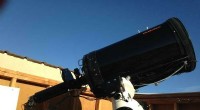
* Reflecting telescopes: Consists of a primary mirror at the bottom of the tube and a secondary mirror that reflects the light to the eyepiece. They can be made lighter and more compact than refracting telescopes.
3. Image quality and limitations:
* Refracting telescopes:
* Advantages: Produce sharper images due to less distortion, better for observing planets and details on the moon.
* Disadvantages: Suffer from chromatic aberration (color fringing around bright objects), limited aperture size due to the difficulty of making large lenses.
* Reflecting telescopes:
* Advantages: Can be made with larger apertures, less expensive, and can be built with simpler designs.
* Disadvantages: Can suffer from coma and astigmatism (distortions in the image), often require more frequent cleaning and maintenance.
4. Applications:
* Refracting telescopes: Widely used in amateur astronomy for observing planets, the moon, and bright stars. Also used for guiding and pointing in larger observatories.
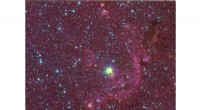
* Reflecting telescopes: Often used in professional observatories due to their large aperture sizes, allowing for fainter objects to be observed. Also widely used in amateur astronomy for deep-sky objects like galaxies and nebulae.
In conclusion:
Both refracting and reflecting telescopes are valuable tools for observing the universe. Refracting telescopes excel in producing sharp images, while reflecting telescopes offer greater light gathering capabilities and are more affordable. The best telescope for a particular application depends on individual needs and preferences.