The Moon's Gravity:
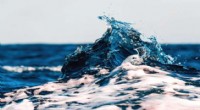
* The Moon exerts a gravitational pull on the Earth, just as the Earth pulls on the Moon. This gravitational force is stronger on the side of Earth facing the Moon, creating a bulge of water.
* On the opposite side of Earth, the Moon's gravity is weaker, but it still pulls the Earth slightly away from the water, causing a second bulge.
Earth's Rotation:
* As the Earth rotates, these bulges of water, called high tides, travel around the globe. The areas between the bulges experience low tides.
* This means that most coastal areas experience two high tides and two low tides each day.
The Sun's Influence:
* While the Moon is the primary driver of tides, the Sun also exerts a gravitational pull on Earth.
* When the Sun, Moon, and Earth align (during new moon and full moon phases), their combined gravitational pull creates even stronger high tides, called spring tides.
* When the Sun, Moon, and Earth form a right angle (during quarter moon phases), the Sun's gravity partially cancels out the Moon's, resulting in weaker high tides, called neap tides.
In Summary:
The Moon's gravity is the primary force responsible for tides. It pulls the water on Earth towards it, creating bulges on both the near and far sides of the planet. These bulges travel around the Earth as it rotates, causing high tides. The Sun's gravity also plays a role, influencing the strength of the tides based on its alignment with the Moon and Earth.