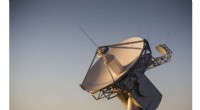
While it might look like a traditional optical telescope, it doesn't actually look at visible light. Instead, it's designed to detect microwaves, a type of electromagnetic radiation with longer wavelengths than visible light. This allows it to study the Cosmic Microwave Background (CMB), the faint afterglow of the Big Bang.