The Giant Impact Hypothesis:
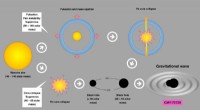
* Collision: The prevailing theory suggests that a Mars-sized object, named Theia, collided with a young, molten Earth. This impact was incredibly violent, releasing immense amounts of energy.
* Debris Ejection: The collision ejected a massive amount of Earth's mantle and Theia's material into space, forming a giant disc of debris around Earth.
* Accretion: Over time, the gravitational pull of Earth and the debris itself drew the particles together. This process, called accretion, gradually formed the Moon.
* Differentiation: As the Moon coalesced, heavier elements sank to its core while lighter materials rose to the surface, creating the Moon's internal structure.
Gravity's Roles:
* Collision: The initial collision was driven by gravity, as Theia's and Earth's gravitational attraction pulled them together.
* Debris Gathering: Gravity was the primary force responsible for gathering the ejected debris, forming the disc that eventually coalesced into the Moon.
* Formation: The Moon's continued growth was also driven by gravity, attracting more particles from the surrounding disc.
Further Insights:
* Tidal Forces: The Moon's gravitational pull on Earth still affects our tides, a testament to the enduring impact of gravity on our celestial relationship.
* Evolution: Gravity also plays a role in the Moon's evolution, influencing its internal structure and causing its gradual recession from Earth.
Current Research:
* Scientists are still actively researching the details of the giant impact, trying to refine our understanding of the Moon's formation. For example, they are looking for evidence of Theia's composition in lunar samples.
In conclusion, gravity played a fundamental role in every stage of the Moon's formation, from the initial collision to the accretion of debris and its continued evolution. Understanding this complex interplay of gravitational forces provides a crucial window into the history of our solar system.