General Terms:
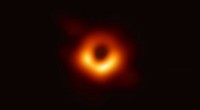
* Black hole: This is the most common term, though it's more of a general descriptor than a specific scientific term.
* Gravitational singularity: This refers to the point of infinite density at the center of a black hole, where the laws of physics as we know them break down.
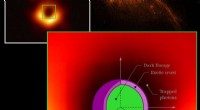
* Event horizon: This is the boundary around a black hole where the escape velocity exceeds the speed of light. Nothing, not even light, can escape from within the event horizon.
Other Terms:
* Schwarzschild radius: This is the radius of the event horizon.
* Kerr black hole: This describes a rotating black hole, which is thought to be the most common type.
* Primordial black hole: This is a hypothetical type of black hole that formed in the early universe.
* Supermassive black hole: This is a type of black hole with a mass millions or billions of times that of the Sun. These are found at the centers of most galaxies.
Specific Processes:
* Accretion: The process of matter falling into a black hole.
* Hawking radiation: The theoretical emission of particles from a black hole, predicted by Stephen Hawking.
* Tidal disruption: The process by which a star or other object is torn apart by the gravitational forces of a black hole.
These are just a few of the many terms associated with black holes. The field is constantly evolving as scientists learn more about these fascinating objects.