Natural:
* Rainbows: After a rainstorm, sunlight refracting through water droplets creates a visible spectrum.
* Sunrise/Sunset: The light from the sun, especially near the horizon, can appear as a spectrum of colors as it passes through the atmosphere.
* Prisms: A glass prism will split white light into its component colors, revealing a spectrum.
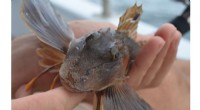
* Bird feathers: Some birds have feathers that refract light, displaying a spectrum of colors like iridescent blues and greens.
* Soap bubbles: Thin films of soap create interference patterns, which can produce a spectrum of colors.
* Diffraction grating: This tool, often found in scientific instruments, splits light into its wavelengths, creating a spectrum.
Man-made:
* Spectroscope: A scientific instrument that uses a prism or diffraction grating to analyze the spectrum of light.
* Spectrometer: A similar instrument to a spectroscope, but it uses a detector to measure the intensity of each wavelength in the spectrum.
* Holograms: These are images that use interference patterns to create a spectrum of colors.
* Television screens: These screens use pixels that emit light at different wavelengths to create a spectrum of colors.
These are just a few examples. There are many other ways to see a spectrum, and it's a fascinating phenomenon that shows us the nature of light!