Here's how the Hubble Space Telescope helps us:
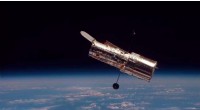
1. Revolutionized Astronomy: Hubble provided astronomers with unprecedented views of the universe, allowing for groundbreaking astronomical observations and discoveries. It captured images with much greater resolution, sensitivity, and clarity compared to ground-based telescopes.
2. Deep Field Observations: Hubble's Deep Field observations revealed the vastness of the universe, showing galaxies and stars that existed billions of years ago. These observations helped scientists study the early universe and understand its evolution.
3. Hubble Deep Field: The Hubble Deep Field image, taken in 1995, was one of the most significant astronomical images obtained by HST. It revealed thousands of previously unknown galaxies, providing insights into the universe's early stages.
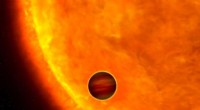
4. Planets and Solar System: Hubble made important contributions to our understanding of planets in our own solar system and the exoplanets orbiting other stars. It discovered moons around several planets and provided detailed images of planetary atmospheres and surfaces.
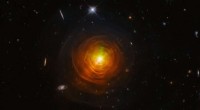
5. Stellar Life Cycles: Hubble's observations helped scientists understand stellar life cycles, including the birth, evolution, and death of stars. It provided evidence of stellar nurseries, supernovas, and planetary nebulas.
6. Galaxy Formation: Hubble's observations provided insights into galaxy formation and evolution, including the interactions between galaxies and the influence of dark matter on galaxy clusters.
7. Black Holes: Hubble made important observations of supermassive black holes residing at the centers of galaxies, shedding light on their properties and their effects on surrounding galaxies.
8. Supernovas: Hubble provided high-resolution images and data of supernova explosions, helping scientists gain insights into the death of massive stars and the creation of heavy elements.
9. Dark Matter and Dark Energy: Hubble's observations provided evidence supporting the existence of dark matter and dark energy, mysterious entities that play crucial roles in the expansion and evolution of the universe.
10. Public Outreach: Hubble's stunning images helped captivate the public and generate interest in astronomy and science, inspiring future generations of scientists and astronomers.
Overall, the Hubble Space Telescope has been a transformative tool in astronomy, enabling scientists to explore the depths of space, make breakthrough discoveries, and advance our understanding of the cosmos.