The Moon is thought to have formed about 4.5 billion years ago, shortly after the formation of the Earth. The most widely accepted theory is that the Moon formed from a giant impact between Earth and another planet-sized body called Theia. The Moon is gradually receding from Earth at the rate of about 3.8 centimeters (1.5 inches) per year.
The Moon has a surface area of about 38 million square kilometers (15 million square miles). It is composed of roughly equal parts oxygen, silicon, magnesium, iron, and calcium. The surface is mostly covered with a fine dust called regolith, which was created by the impact of meteorites and asteroids over billions of years.
The Moon has no atmosphere, so the temperature can range from -173 to 127 degrees Celsius (from -280 to 261 degrees Fahrenheit). The Moon has a very thin atmosphere called an exosphere, which is made up of mostly helium and argon.
The Moon has no liquid water on its surface. However, there is evidence that there may be water ice at the Moon's poles. In 2019, the Indian Space Research Organisation (ISRO) announced that it had detected water ice on the Moon's south pole.
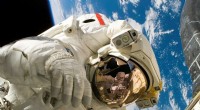
The Moon has been visited by humans on six occasions, all of which were missions of the United States Apollo program. The first humans to walk on the Moon were Neil Armstrong and Buzz Aldrin, who landed on July 20, 1969. The last humans to walk on the Moon were Eugene Cernan and Harrison Schmitt, who left on December 14, 1972.
The Moon is a popular subject of art, literature, and music. It has been depicted in paintings, sculptures, poems, songs, and films throughout history. The Moon is also a popular destination for space exploration. There are currently several missions planned to the Moon, including the Artemis program, which aims to return humans to the Moon by 2024.