1. Optical Design: Early telescopes used simple lenses or mirrors, known as refracting or reflecting telescopes. However, due to optical limitations, such as chromatic aberration (distortion of colors), these early telescopes had limited performance. Over time, improved optical designs were introduced, such as compound lenses and reflecting telescopes with various mirror configurations, reducing aberrations and increasing image quality.
2. Aperture Size: The aperture (diameter) of a telescope is crucial for gathering light and resolving fine details. As technology progressed, telescopes with larger apertures were constructed, allowing astronomers to collect more light and observe fainter objects. The development of larger and more powerful telescopes, like the Hubble Space Telescope, has significantly expanded our ability to study deep space.
3. Tracking and Mounting Systems: Early telescopes had basic mounts, making it challenging to track moving celestial objects accurately. The introduction of advanced tracking and mounting systems, such as equatorial mounts, Dobsonian mounts, and computer-controlled systems, has greatly improved the ability to follow and study moving objects in the sky.
4. Observatory Structures: Telescopes housed in observatories provide protection from environmental conditions and allow for better temperature control, which is essential for precise observations. Observatories have evolved from simple domes to sophisticated structures with complex mechanisms and advanced technology to house and support large telescopes.
5. Instrumentation and Detectors: Telescopes are equipped with various instruments and detectors to analyze and record the collected light. Early telescopes relied on visual observation or photographic plates. With advancements in technology, telescopes incorporated charge-coupled devices (CCDs), infrared cameras, and spectrographs, enabling astronomers to capture more detailed images and study different wavelengths of light.
6. Computer Control and Automation: Modern telescopes are often computer-controlled, allowing for automation of observation processes and precise pointing of the telescope. Computers assist in aligning telescopes, tracking objects, collecting data, and even analyzing the obtained data.
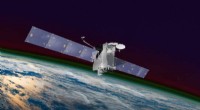
7. Space-Based Telescopes: In addition to ground-based observatories, space-based telescopes have been developed and launched into orbit. Telescopes like the Hubble Space Telescope and the James Webb Space Telescope have provided unprecedented views of the universe, free from atmospheric distortions and with increased sensitivity to faint objects.
8. Adaptive Optics: To overcome the distortions caused by Earth's atmosphere, telescopes utilize adaptive optics systems. These systems employ deformable mirrors or segmented mirrors that rapidly adjust to compensate for atmospheric turbulence, resulting in sharper and clearer images.
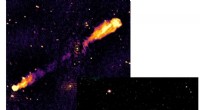
9. Multi-Wavelength Observations: Modern telescopes are capable of observing across different wavelengths of the electromagnetic spectrum, including visible light, infrared, ultraviolet, and radio waves. This multi-wavelength approach provides a comprehensive understanding of the universe and allows astronomers to study objects with different characteristics and compositions.
These advancements in telescope design, technology, and capabilities have revolutionized the field of astronomy and astrophysics, unlocking the secrets of the cosmos and expanding our understanding of the universe. As technology continues to advance, telescopes will undoubtedly continue to evolve, enabling astronomers to explore even further into the vastness of space.