Explanation:
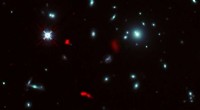
One of the main advantages of the Hubble Space Telescope over ground-based telescopes is its ability to observe the universe in ultraviolet, visible, and near-infrared light. This allows astronomers to study objects that are too faint or too distant to be seen by ground-based telescopes, and to penetrate through dust and gas that can block visible light.
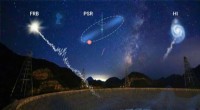
However, the Hubble Space Telescope cannot see in the radio or infrared portion of the spectrum. Radio telescopes are used to study objects that emit radio waves, such as pulsars and quasars, while infrared telescopes are used to study objects that emit infrared radiation, such as stars and galaxies that are obscured by dust.