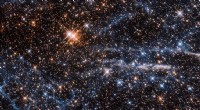
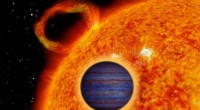
Stars are the most common objects in space. They are large, luminous balls of gas that produce their own light and heat. Stars range in size from red dwarfs, which are about the size of Jupiter, to blue giants, which can be hundreds of times larger than the Sun.
2. Planets
Planets are objects that orbit stars. They are smaller than stars and do not produce their own light and heat. Planets can be made of rock, gas, or ice. Some planets have atmospheres, while others do not.
3. Moons
Moons are objects that orbit planets. They are smaller than planets and do not produce their own light and heat. Moons can be made of rock, gas, or ice. Some moons have atmospheres, while others do not.
4. Asteroids
Asteroids are small, rocky objects that orbit the Sun. They range in size from a few feet to hundreds of miles across. Asteroids are sometimes called minor planets.
5. Comets
Comets are small, icy objects that orbit the Sun. They have a long, thin tail that is made of gas and dust. Comets are sometimes called dirty snowballs.
6. Meteoroids
Meteoroids are small, rocky objects that are found in space. They can be the size of a grain of sand or as large as a small car. When meteoroids enter the Earth's atmosphere, they are called meteors. If a meteor reaches the ground, it is called a meteorite.
7. Gas and dust
There is a lot of gas and dust in space. This gas and dust is made up of the same elements that make up stars, planets, and other objects in space.
8. Dark matter
Dark matter is a mysterious type of matter that makes up about 27% of the universe. Dark matter is invisible and does not interact with light or other forms of electromagnetic radiation. Scientists don't know what dark matter is made of, but they believe that it is responsible for holding galaxies together.
9. Energy
There is also a lot of energy in space. This energy comes from stars, planets, and other objects in space. Energy can also travel through space in the form of light, heat, and other forms of electromagnetic radiation.