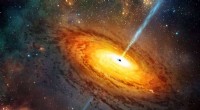
1. Vast Distances: The distances to other galaxies are incredibly vast and far exceed the capabilities of any current spacecraft or propulsion system. The closest major galaxy to our own, the Andromeda Galaxy, is approximately 2.5 million light-years away. Traveling at the speed of light, which is the fastest possible speed in the universe according to Einstein's theory of relativity, it would still take over 2.5 million years to reach Andromeda. With our current technology, this duration is simply impractical and beyond our lifespan.
2. Extreme Energy Requirements: Overcoming the immense distances to other galaxies would require enormous amounts of energy. Conventional rocket propulsion, as used in space travel today, is insufficient for interstellar travel. Advanced propulsion technologies, such as fusion-powered rockets or hypothetical faster-than-light (FTL) drives, remain speculative and currently lack any proven basis in physics.
3. Time Dilation and Relativity: As an object approaches the speed of light, time dilation becomes significant. According to Einstein's theory of relativity, for an observer traveling near the speed of light, time passes slower compared to someone in a stationary reference frame. This means that even if a spacecraft could travel close to the speed of light, the journey to another galaxy would seem much longer for the passengers than for those on Earth.
4. Life-Sustaining Challenges: Space travel to other galaxies presents numerous life-sustaining challenges, such as the need for a constant source of energy, food, water, and protection from radiation. During the prolonged travel time, the astronauts would face physical and psychological challenges that are difficult to overcome with current technology.
5. Intergalactic Medium (IGM): The vast space between galaxies, known as the intergalactic medium, is not entirely empty. It contains extremely thin gas and dust. As a spacecraft travels through the IGM, it would encounter some resistance and increased friction due to these particles, further slowing down its journey.
While ongoing research and advancements in space technology are pushing the boundaries of what's possible, space travel to other galaxies remains rooted in the realm of speculation and theoretical concepts rather than practical possibilities within our current understanding of science and technology.