The first artificial satellite, Sputnik 1, was launched by the Soviet Union in 1957. Since then, thousands of satellites have been launched into orbit, and they play a vital role in our everyday lives.
Satellites are typically launched into orbit using a rocket. Once in orbit, they are able to maintain their position using the force of gravity. Satellites are powered by solar panels or batteries, and they communicate with ground stations using radio waves.
The size of satellites can vary greatly. Some satellites are as small as a shoebox, while others are as large as a bus. The weight of satellites can also vary greatly, from a few pounds to several tons.
Satellites orbit at different altitudes. Some satellites orbit in low Earth orbit (LEO), which is a range of altitudes up to 2,000 kilometers. Other satellites orbit in medium Earth orbit (MEO), which is a range of altitudes between 2,000 and 35,786 kilometers. Still other satellites orbit in geostationary orbit (GEO), which is a range of altitudes of about 35,786 kilometers.
Satellites are used for a variety of purposes, including:
* Communications: Satellites are used to relay communications signals between different parts of the world. This includes telephone calls, television broadcasts, and internet traffic.
* Weather forecasting: Satellites are used to collect data about the Earth's weather. This data is used to create weather forecasts and to track hurricanes and other storms.
* Remote sensing: Satellites are used to collect data about the Earth's surface. This data is used for a variety of purposes, including agriculture, forestry, and urban planning.
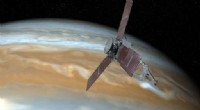
* Scientific research: Satellites are used to collect data about the Earth's environment and the solar system. This data is used to advance our understanding of the Earth's climate and the evolution of the solar system.
Satellites play a vital role in our everyday lives. They provide us with the communications, weather forecasting, and remote sensing services that we rely on. Satellites also help us to advance our scientific knowledge of the Earth and the solar system.