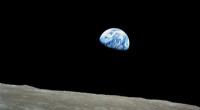
The Moon's gravity is about one-sixth the strength of Earth's gravity. This means that if you were on the Moon, you would weigh about one-sixth of what you weigh on Earth. This would make you feel much lighter, and you would be able to jump much higher.
The Moon's gravity is also responsible for the tides on Earth. The tides are caused by the difference in the gravitational pull of the Moon on different parts of the Earth. The Moon's gravity is strongest at the point on the Earth that is closest to the Moon, and weakest at the point on the Earth that is farthest from the Moon. This difference in gravitational pull causes the water on Earth to bulge out towards the Moon, creating the tides.