- Moons: Natural satellites that orbit a planet. Earth has one moon, while other planets like Jupiter and Saturn have multiple moons.
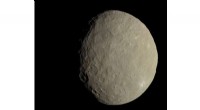
- Planetoids or Asteroids: These rock-like objects orbit the Sun and often have irregular shapes.
Artificial
Satellites classified according to their purpose include:
- Communications Satellites: Relays radio, TV, phone signals globally, enabling long-distance communication and TV broadcasting.
- Weather Satellites: Monitor weather patterns and provide valuable data for weather forecasting.
- Navigation Satellites: Used for navigation and positioning, providing information for GPS devices.
-Remote Sensing Satellites: Observe and collect data on Earth's surface, contributing to environmental monitoring, mapping, and resource exploration.
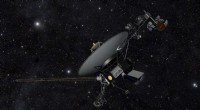
-Scientific Research Satellites: Conduct scientific experiments in space, studying various phenomena like Earth's magnetic field, celestial bodies, and the universe.
-Spacecraft: Vessels carrying astronauts and vehicles for space exploration, satellite maintenance, and scientific missions.