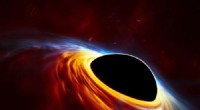
1. Gravitational Interactions: Satellites and objects in space are subject to the gravitational forces exerted by each other and by other celestial bodies such as planets, moons, and stars. The gravitational force between two objects is directly proportional to the product of their masses and inversely proportional to the square of the distance between them. Gravitational interactions play a crucial role in determining the orbits and trajectories of satellites and objects in space.
2. Orbital Perturbations: As satellites orbit around Earth or other celestial bodies, they experience various perturbations that can affect their orbits. These perturbations can be caused by the gravitational influence of other planets, moons, and non-spherical mass distributions within the Earth. Satellites may also be affected by atmospheric drag, solar radiation pressure, and the Earth's magnetic field. These perturbations can cause satellites to deviate from their intended orbits and require adjustments to maintain their desired positions.
3. Collision Avoidance: In a crowded space environment with numerous satellites and space debris, collision avoidance becomes a critical concern. Satellites are equipped with various sensors and systems that allow them to detect and track nearby objects. When a potential collision is identified, satellites can perform maneuvers such as orbit adjustments or collision avoidance maneuvers to avoid impact. Space agencies and organizations also implement measures to mitigate collision risks by tracking space objects and coordinating satellite operations.
4. Satellite Servicing: Satellites can interact with other objects for the purpose of servicing and maintenance. Servicing missions may involve sending robotic spacecraft or astronauts to repair, refuel, or upgrade existing satellites. These interactions require precision maneuvers and careful coordination to avoid damage or interference with satellite operations.
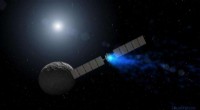
5. Scientific Investigations: Satellites can carry scientific instruments and sensors to study various aspects of space and the universe. These satellites may interact with objects such as asteroids, comets, or other celestial bodies to gather data, collect samples, or perform scientific experiments. Interacting with these objects helps scientists gain insights into the formation and evolution of the solar system, planetary atmospheres, and other cosmic phenomena.
It's important to note that the specific interactions between satellites and objects in space depend on the nature of the satellite mission, the environment in which it operates, and the presence of other space objects. Space agencies and organizations carefully plan and manage satellite operations to ensure safe and efficient interactions in the complex environment of space.