1. Planetary Science and Comparative Planetology:
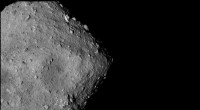
- Exploration of other planets, moons, and asteroids has given us insights into the geological processes, surface characteristics, atmospheres, and potential habitability of these celestial bodies.
2. Earth Science and Climate Research:
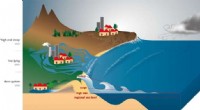
- Space-based observations and data collection help us monitor and understand Earth's climate, weather patterns, natural disasters, and changes to ecosystems.
3. Astrophysics and Cosmology:
- Space observatories like the Hubble Space Telescope have provided detailed observations of distant galaxies, stars, and cosmic phenomena, helping us unravel the mysteries of the universe's origin, evolution, and structure.
4. Exoplanets and the Search for Life:
- The discovery of exoplanets orbiting distant stars has expanded our knowledge about the diversity of planetary systems and offered insights into the possibility of life beyond Earth.
5. Space Weather and Solar Physics:
- Studying the Sun's activity, solar flares, and space weather helps us understand their impacts on Earth's magnetic field, climate, and satellite operations.
6. Astrobiology and Origin of Life:
- Space exploration seeks evidence of life beyond Earth and investigates environments on celestial bodies that could support the emergence of life.
7. Remote Sensing and Earth Observation:
- Satellites provide data for monitoring deforestation, land use, agriculture, urban growth, and other aspects of Earth's geography and dynamics.
8. Space Medicine and Human Physiology:
- Studying astronauts' health and adaptions in space helps us understand how the human body copes with challenging environments and microgravity.
9. Astronomy and Fundamental Physics:
- Space telescopes have allowed us to observe and study cosmic events like black hole mergers, gravitational waves, and the behavior of matter under extreme conditions.
10. Technological Innovations and Engineering:
- Space missions and space technology development spur breakthroughs in areas such as materials science, propulsion systems, robotics, and electronics.
11. Exploration of Natural Resources:
- Space exploration enables the search for valuable natural resources like water ice on other planets and asteroids.
12. Cultural and Philosophical Insights:
- Seeing Earth from space has inspired people to reflect on our place in the cosmos and the importance of planetary stewardship.
Space exploration not only expands our scientific understanding but also drives technological advancements and fosters international collaboration in scientific research.