1. Challenges of Space Travel: The vacuum of space presents significant challenges for space travel. Objects in space are in a constant state of motion, and without air resistance, they can travel at incredibly high speeds. This lack of atmospheric friction also means that spacecraft require an immense amount of fuel for maneuvers like changing orbits or altering course.
2. Thermal Control: Space is subject to extreme temperature variations. On the sunny side of space objects, temperatures can reach up to hundreds of degrees Celsius due to direct sunlight, while in shaded areas or during spacecraft nights, temperatures can drop significantly. Ensuring proper thermal control is vital to protect spacecraft components from overheating or extreme cold.
3. Radiation Hazards: Space is filled with radiation from various sources, including the Sun, stars, and cosmic rays. These high-energy particles can be damaging to electronic components, disrupt communications, and pose health risks to astronauts during extended missions. Specialized shielding is necessary on space vehicles to protect against radiation exposure.
4. Light and Signal Delays: The vacuum of space allows light and electromagnetic signals to travel at the speed of light, the fastest possible speed in the universe. However, this means that any communication or data exchange with spacecraft can take minutes, hours, or even days to complete, depending on the distance involved. This delay can be a challenge for real-time communication and mission coordination.
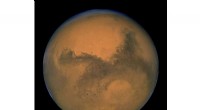
5. Exploration of Space Bodies: The vacuum of space enables scientists to study other planets, moons, and celestial objects with minimal atmospheric interference. Space telescopes placed in orbit above the Earth's atmosphere can capture clear and unobstructed images of the universe. Additionally, spacecraft can land on other space bodies and directly study their surfaces and atmospheres.
6. Observing the Universe: The vacuum of space allows astronomers to observe distant galaxies and celestial events with greater clarity and sensitivity. Telescopes and instruments in space are able to detect faint signals and study astronomical phenomena that would be obscured or distorted by the Earth's atmosphere.
In conclusion, the near-perfect vacuum of space imposes challenges and provides opportunities for space exploration and our understanding of the universe. It affects spacecraft maneuvers, temperature regulation, radiation protection, and communication delays. Conversely, it allows for observations of the cosmos with reduced interference, enabling scientists to study the wonders of the universe beyond our planet.