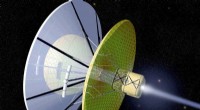
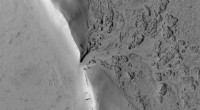
1. Spacecraft Technology: The ability to send spacecraft closer to the moon and even land on its surface has been fundamental in obtaining detailed images. Probes equipped with high-resolution cameras, such as the Lunar Reconnaissance Orbiter (LRO), have orbited the moon, providing unprecedented close-up views.
2. Camera Technology: Advancements in camera technology, including improvements in sensor resolution, optics, and image processing algorithms, have enabled spacecraft cameras to capture sharp and detailed images.
3. Telescope Technology: Ground-based telescopes have also made significant contributions to capturing high-resolution images of the moon. Large telescopes equipped with adaptive optics systems can compensate for atmospheric turbulence and deliver crisp images.
4. Image Processing Techniques: Sophisticated image processing techniques, such as stacking, sharpening, and color correction, help enhance the quality of raw images and reveal subtle details.
5. Computational Photography: Computational photography techniques, including photo merging and super-resolution algorithms, enable the combination of multiple images to produce even higher-resolution composite images.
6. Unmanned Aerial Vehicles (UAVs): In recent years, UAVs equipped with high-resolution cameras have been used to capture images of the moon from near-Earth orbits.
7. Laser Altimetry: Laser altimetry techniques used on spacecraft like the LRO have provided high-resolution topographic data, allowing for the creation of detailed 3D models of the lunar surface.
These advancements have revolutionized our understanding of the moon's geology, topography, and surface features, providing valuable insights into its history and evolution.