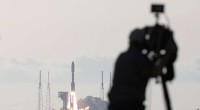
1.Space Exploration:
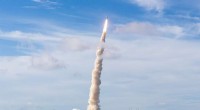
- Design, develop and launch spacecraft and probes to explore planets, moons, comets, asteroids and other celestial bodies within our solar system and beyond.
-Conduct scientific research missions to understand the characteristics ,composition, and processes occurring in different planetary systems.
-Search for potential habitats and signs of life beyond earth.
2.Astronomy and Astrophysics:
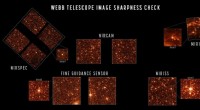
- Operates network of ground based telescopes and space-based observatories such as the Hubble Space Telescope and the James Web Space Telescope.
- Study the universe formation and evolution, observe distant galaxies,,stars, planets and other celestial phenomena.
- Conduct astrophysical research to increase our understanding of the origins and properties of the universe and its components.
3.Planetary Science:
- Conducts missions to study planets, moons , and other objects within our solar system, including Mars, Venus, Jupiter, Saturn and Pluto.
-Investigate the geology, atmospheres, surface compositions and potential for habitability of these celestial bodies.
-Analyze the date collected from planetary missions to gain insight into the formation and history of our solar system.
4.Human Space Flight:
-Plans, develops and conducts human space flight missions, including the International Space Stations(ISS),with the goal of extending human presence in space.
-Conduct research on the effects of space travel on human physiology, psychology, and biology to ensure astronaut safety and well being during long-duration missions.
-Develop technologies and systems for future space exploration missions, including deep space habitats and propulsion system.
5.Earth Science:
-Monitors and studies Earths climate, oceans, atmosphere and land surfaces using satellites, aircrafts and ground-based instruments.
-Collect and analyze data on environmental changes, weather patterns, natural hazards and other earth processes to improve understanding of our planet's dynamics.
-Supports research to address societal challenges such as climate change ,災害と天然資源管理。
6.Space Technology Development:
-Conducts research and develops advanced space technologies, including new materials, propulsion systems, communication technologies, robotics, and autonomous systems.
-Promote the transfer of technologies developed for space exploration into other fields, such as medicine, communication, energy, and manufacturing.
7.Aerospace Engineering and Research:
- Conducts research in aerodynamics, propulsion, structures, materials, and control systems to advance the design and efficiency of aircrafts and spacecraft.
-Develops new aviation technologies and concepts for future air transportation systems, including quieter and more fuel efficient aircrafts.
8.Education and Public Outreach:
-Provides educational resources, programs, and activities to inspire students and the public about science , technology, engineering, mathematics(STEM) and space exploration.
-Engages in outreach activities to raise awareness about NASA missions, discoveries, and the importance of space exploration to benefit humanity.