* Jupiter:
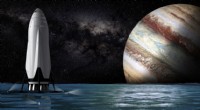
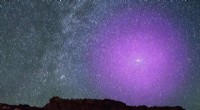
* Jupiter has the largest magnetic field in the solar system, with a strength of about 4 trillion times that of Earth's.
* Jupiter's Great Red Spot is a gigantic storm that has been raging for at least 350 years. It is larger than Earth and could hold three Earths inside of it.
* Jupiter has a very thick atmosphere, composed mostly of hydrogen and helium. The pressure at the center of Jupiter is about 24 million times greater than the pressure at Earth's sea level.
* Saturn:
* Saturn is the flattest planet in the solar system, with a very pronounced equatorial bulge and a flattened polar region.
* Saturn has a beautiful ring system, composed of countless particles of ice and rock. The rings are divided into several divisions, with the most prominent ones being the A, B, and C rings.
* Saturn's largest moon, Titan, is the only moon in the solar system with a thick atmosphere. Titan's atmosphere is composed mostly of nitrogen and methane, and it has a surface temperature of about -180 degrees Celsius.
* Uranus:
* Uranus is the coldest planet in the solar system, with a surface temperature of about -224 degrees Celsius.
* Uranus has a very unique rotation, spinning on its side like a giant ball. This unusual rotation is thought to be the result of a collision with a large object in the past.
* Uranus has a very strong magnetic field, which is tilted at a 59-degree angle from its axis of rotation. This unusual tilt causes Uranus' magnetic field to be highly asymmetrical.
* Neptune:
* Neptune is the farthest planet from the Sun in our solar system. It is located about 30 times farther from the Sun than Earth is.
* Neptune has a very strong magnetic field, which is about 27 times stronger than Earth's.
* Neptune has a very turbulent atmosphere, with winds that can reach speeds of up to 2,000 kilometers per hour.