1. Gas Accretion and Collapse:
- Spiral galaxies begin as rotating clouds of gas and dust in the vast universe. These clouds are mainly composed of hydrogen and helium and are known as protogalactic clouds.
- The gravitational attraction within the protogalactic cloud causes it to contract and condense, giving rise to the formation of a protogalactic disk.
2. Angular Momentum:
- As the gas cloud collapses, conservation of angular momentum plays a crucial role.
- The rotating motion of the gas cloud results in the formation of a spinning disk, a characteristic feature of spiral galaxies.
3. Density Waves and Spiral Arms:
- Gravitational interactions within the protogalactic disk cause the formation of density waves in the gas and stars.
- These density waves further develop into spiral arms, the iconic structures that give spiral galaxies their name.
- Differential rotation also contributes to the shape and maintenance of spiral arms. This refers to the different rotational speeds of the inner and outer parts of the galaxy, where stars and gas in the inner region rotate faster than those in the outer region.
4. Giant Molecular Clouds:
- Within the spiral arms, the compressed gas forms giant molecular clouds (GMCs), which are birthplaces for new stars.
- GMCs are dense accumulations of gas and dust where active star formation takes place. Newly formed, young, and massive stars give spiral arms their prominent blue hue.
5. Supermassive Black Holes:
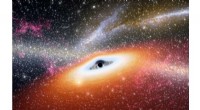
- At the center of many spiral galaxies, including our Milky Way, lies a supermassive black hole (SMBH).
- The gravitational influence of the SMBH and the surrounding matter results in a galactic bulge, contributing to the galaxy's central structure.
6. Feedback Mechanisms:
- Throughout the galaxy's evolution, ongoing star formation and supernova explosions inject vast amounts of energy and heavy elements into the interstellar medium.
- These feedback mechanisms affect the surrounding gas dynamics, triggering new episodes of star formation and shaping the galaxy's overall structure.
In summary, spiral galaxies form through gravitational collapse and contraction of rotating gas clouds. Density waves lead to the development of spiral arms, where active star formation occurs. Supermassive black holes and continuous feedback mechanisms shape and influence the galaxy's central structure and stellar populations. These processes and interactions contribute to the distinct architecture and beauty of spiral galaxies we observe in the universe.