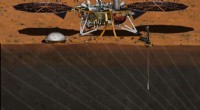
1. Distance: The planets in our solar system are very far apart. For example, Mars, our closest neighboring planet, is an average of 225 million kilometers away from Earth. This means that even with the fastest spacecraft we have built, it would take months to reach Mars.
2. Atmosphere: Most planets in our solar system have atmospheres, but these atmospheres can be very different from Earth's atmosphere. For example, Mars has a very thin atmosphere, while Venus has a very thick atmosphere. This can make it difficult for spacecraft to land on or explore these planets.
3. Gravity: The gravity on other planets is different from the gravity on Earth. For example, the gravity on Mars is only about one-third the gravity on Earth, while the gravity on Venus is about twice the gravity on Earth. This can make it difficult for astronauts to walk or move around on these planets.
4. Radiation: Space is filled with radiation, and this radiation can be harmful to astronauts. The radiation levels on other planets can be much higher than the radiation levels on Earth, which means that astronauts would need to be protected from this radiation.
5. Life support: Astronauts need to have food, water, and oxygen in order to survive. These supplies can be difficult to transport to other planets, and they also need to be stored in a way that protects them from the harsh conditions of space.
6. Cost: Space travel is very expensive. It costs billions of dollars to send a spacecraft to another planet. This means that only a limited number of missions can be launched, and these missions are often limited in scope and duration.
Despite these difficulties, humans have been able to send spacecraft to other planets. However, it is likely to be many years before humans are able to travel to other planets and walk on their surfaces.