Neutron stars are supported against gravity by neutron degeneracy pressure, which is a quantum mechanical effect that arises from the Pauli exclusion principle. This principle states that two neutrons cannot occupy the same quantum state, which means that the neutrons in a neutron star are all packed together as tightly as possible. This extreme density leads to several strange and exotic properties, including:
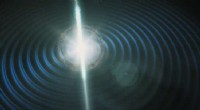
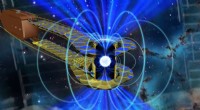
* High magnetic fields: The rotation of neutron stars generates incredibly strong magnetic fields, which can be as high as 10^12 gauss. This is more than a trillion times stronger than the Earth's magnetic field.
* Rapid rotation: Neutron stars can rotate very rapidly, with some spinning hundreds or even thousands of times per second. This rotation is thought to be caused by the conservation of angular momentum during the collapse of the massive star.
* Glitches: Neutron stars sometimes experience sudden changes in their rotation rate, known as glitches. These glitches are thought to be caused by the sudden release of energy from the star's interior.
Neutron stars are fascinating objects that continue to challenge our understanding of the universe. They are a testament to the amazing diversity of matter and the extreme conditions that can exist in space.