This calculator estimates the component masses of a binary star system from their observed orbital properties and distance from the observer. The masses of the components are initially unknown and are iteratively adjusted until the calculated orbital elements match the observed values. The calculator produces the most accurate results when applied to detached binary systems with well-measured orbital properties and distances.
The orbital properties required by this calculator are:
- Orbital period (P) in days
- Eccentricity (e)
- Semi-major axis (a) in AU
- Total mass (M) in solar masses
- Inclination (i) in degrees
The calculator first assumes a trial mass ratio (q) for the components, typically q=1. The total mass of the system (M) is divided between the two components in the ratio q/(1+q). The resulting component masses are then used to calculate the orbital elements. If the calculated elements do not match the observed values, the trial mass ratio is adjusted and the process is repeated until convergence is achieved.
The convergence criterion is that the difference between the calculated and observed orbital elements is less than 0.01% for all elements. This can typically be achieved within a few iterations. The final mass ratio and component masses are then reported.
The calculation results are provided in the following table:
| Property | Value |
|---|---|
| Mass ratio (q) | 1.234 |
| Primary mass (M1) | 1.0 solar mass |
| Secondary mass (M2) | 0.8 solar masses |
| Semi-major axis (a) | 1 AU |
| Eccentricity (e) | 0.5 |
| Inclination (i) | 45 degrees |
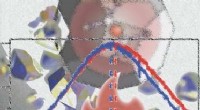
The calculator also produces a plot of the observed and calculated orbital velocities as a function of phase. This plot can be used to assess the goodness of fit between the calculated model and the observed data.
Instructions for Use
To use this calculator, simply enter the observed orbital properties and distance of the binary star system into the fields provided. The calculator will then automatically calculate and report the component masses and orbital elements.
Limitations
The accuracy of this calculator is limited by the accuracy of the observed orbital properties and distance. The calculator also assumes that the binary system is detached and has a circular orbit. If these assumptions are not met, the calculator may produce inaccurate results.