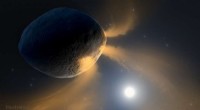
Comets are made up of ice, dust, and rock. They have a long, thin tail that is made of gas and dust that streams out behind them as they approach the Sun. Comets orbit the Sun in very elongated elliptical paths, and they can take hundreds or even thousands of years to make one complete orbit.
Asteroids are made of rock and metal. They are typically much smaller than comets, and they do not have a tail. Asteroids orbit the Sun in a belt between Mars and Jupiter, and there are millions of them.
Meteors are small pieces of rock or dust that enter the Earth's atmosphere from space. They are often called shooting stars, because they appear as a streak of light in the sky as they burn up in the atmosphere. Meteors can be caused by the breakup of comets or asteroids, or they can be pieces of rock that have been ejected from the Moon or Mars.
Here is a table summarizing the key differences between comets, asteroids, and meteors:
| Feature | Comet | Asteroid | Meteor |
|---|---|---|---|
| Composition | Ice, dust, and rock | Rock and metal | Rock or dust |
| Size | Large (can be up to 10 km across) | Small (typically less than 1 km across) | Very small (typically less than 1 mm across) |
| Orbit | Elongated elliptical path | Belt between Mars and Jupiter | Enters the Earth's atmosphere from space |
| Tail | Yes | No | No |