Astronomy is the scientific study of celestial bodies and phenomena outside Earth's atmosphere. It examines the properties, behavior, and evolution of celestial objects, such as planets, stars, galaxies, and other celestial bodies.
Key contributions of Astronomy:
* Observational astronomy: Using telescopes and other instruments to observe and collect data about celestial objects, their movements, and characteristics.
*Astrophysics: Applying the principles of physics to understand the physical properties and behavior of celestial bodies, such as stellar evolution, black hole formation, and supernovae.
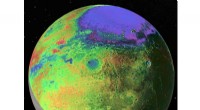
* Planetary Science: Studying the planets, moons, asteroids, and other bodies within our solar system, including their composition, surface features, and potential habitability.
Cosmology is a branch of astronomy that deals with the study of the universe as a whole, its origin, structure, evolution, and ultimate fate. It explores the universe on the largest scales and seeks to understand its fundamental principles and properties.
Key contributions of Cosmology:
* The Big Bang Theory: Cosmology has developed the theory that the universe began about 13.8 billion years ago in a hot, dense state and has been expanding ever since. This theory explains the origin and expansion of the universe.
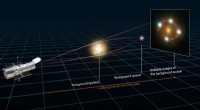
* Cosmic Structure: Cosmologists study the large-scale structure of the universe, including the distribution of galaxies and galaxy clusters, the cosmic microwave background radiation, and the nature of dark matter and dark energy.
*The Evolution of the Universe: By examining distant galaxies and quasars, cosmologists investigate how the universe has evolved over billions of years, including the formation and evolution of galaxies and the history of star formation.
In summary, while astronomy focuses on the study of individual celestial objects and their behavior, cosmology deals with the study of the universe as a whole, its origins, evolution, and fundamental properties. Both astronomy and cosmology contribute to our understanding of the universe by providing insights into the behavior of celestial objects and the vast structure and dynamics of the cosmos.