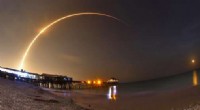
Falling Objects: One of the most direct ways to see gravity in action is by observing falling objects. The constant pull of Earth's gravity causes objects to accelerate towards the ground when dropped.
Orbits: The motion of celestial bodies provides another visible manifestation of gravity. Planets orbit the Sun, moons orbit planets, and stars orbit within galaxies due to the gravitational attraction between them.
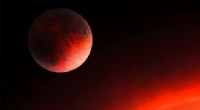
Tides: Gravity also influences the movement of the Earth's oceans, causing tides. The combined gravitational forces of the Moon and the Sun exert different levels of pull on different parts of the Earth's water bodies, resulting in the rise and fall of tides.
Lens Effects: In astrophysics, the immense gravitational fields of massive objects can cause a curvature in space-time, leading to a gravitational lensing effect. This phenomenon bends the path of light from distant galaxies or stars, producing distorted or magnified images that astronomers can observe.
Time Dilation: Gravity has an effect on the passage of time known as time dilation. In the presence of stronger gravitational fields, time appears to slow down compared to weaker gravitational fields. While difficult to perceive directly, this effect has been experimentally confirmed using atomic clocks.
In summary, the effects of gravity, such as falling objects, orbital motion, tides, gravitational lensing, and time dilation, can all be seen and observed as evidence of this fundamental force at work.