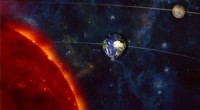
The phases of the Moon are caused by the changing position of the Moon relative to the Sun and the Earth. When the Moon is between the Earth and the Sun, the side of the Moon that faces the Earth is not lit. This is called a new moon. As the Moon moves around the Earth, more and more of the side that faces the Earth becomes lit. This is called a waxing moon. When the Moon is opposite the Sun, the entire side that faces the Earth is lit. This is called a full moon. As the Moon continues to move around the Earth, less and less of the side that faces the Earth becomes lit. This is called a waning moon.
The cycle of the phases of the Moon takes about 29.5 days. This is the same amount of time it takes the Moon to complete one orbit around the Earth.