Some facts about infrared radiation include:
- Infrared radiation was discovered in 1800 by Sir William Herschel, an English astronomer.
- Infrared radiation is used in a variety of applications, including thermal imaging, night vision, remote sensing, and spectroscopy.
- The human body emits infrared radiation, and this radiation can be used to measure body temperature.
- Infrared radiation is used in thermal imaging cameras to create images of objects based on their temperature differences.
- Night vision devices use infrared radiation to allow people to see in the dark.
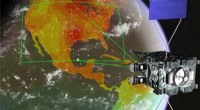
- Remote sensing uses infrared radiation to collect information about objects from a distance, such as their temperature, composition, and motion.
- Spectroscopy uses infrared radiation to identify the chemical composition of objects.
- Infrared radiation is used in a variety of medical applications, including laser surgery, skin rejuvenation, and pain relief.
- Infrared radiation is used in industrial applications, such as heating, drying, and welding.
- Infrared radiation is used in military applications, such as missile guidance and target tracking.