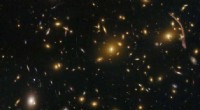
One of the primary goals of PAMELA is to search for dark matter, a hypothetical type of matter that does not interact with electromagnetic radiation. Dark matter is thought to make up a significant fraction of the universe, but its nature is unknown. PAMELA can search for dark matter by looking for an excess of positrons and electrons in cosmic rays, which could be produced by the annihilation of dark matter particles.
PAMELA has not yet detected a statistically significant excess of positrons and electrons in cosmic rays, but it has placed upper limits on the amount of dark matter that can exist. These upper limits are based on the assumption that dark matter particles annihilate into positrons and electrons, but PAMELA is also sensitive to other dark matter annihilation channels.
In addition to searching for dark matter, PAMELA has also made a number of other important observations. These include the discovery of a time-dependent modulation of the cosmic ray flux, which is thought to be caused by the interaction of cosmic rays with the solar wind, and the detection of a high-energy electron spectrum that may be due to pulsars or supernova remnants.
PAMELA continues to operate in orbit, and it is expected to continue to make important contributions to our understanding of cosmic rays and dark matter for many years to come.