1. The Large Hadron Collider (LHC):
The LHC is the world's largest and most powerful particle accelerator. It smashes protons together at nearly the speed of light, creating a particle "soup" that allows us to study the subatomic world and search for new particles and phenomena.
2. High-Precision Detectors:
We use various detectors to capture and measure the particles produced in LHC collisions. These detectors include silicon trackers, electromagnetic calorimeters, and muon chambers. They provide detailed information about the particles, such as their energy, momentum, and trajectory.
3. Data Acquisition and Analysis:
The data from the LHC detectors is enormous, requiring advanced data acquisition systems to record and analyze it efficiently. Computing clusters, including the Worldwide LHC Computing Grid (WLCG), are used to distribute the data processing across multiple sites worldwide. Complex algorithms and statistical techniques help extract valuable information from the vast amount of data.
4. Simulation and Modeling:
We extensively use computer simulations and models to understand and interpret the data from the LHC. These simulations replicate the conditions of the LHC collisions, allowing us to compare the experimental results with theoretical predictions.
5. Precision Measurements:
Our experiments at CERN enable precision measurements of known particles, such as the Higgs boson, as well as the search for new particles beyond the Standard Model. By measuring the mass, spin, and other properties of particles, we can gain insights into the underlying fundamental laws of nature.
6. Rare Processes and Decays:
We study rare processes and decays that occur infrequently, such as the decay of the Higgs boson into different particles. These rare processes provide valuable information about the structure and couplings of the fundamental particles.
7. Dark Matter and Dark Energy:
CERN experiments help us probe the existence and properties of dark matter and dark energy, which are mysterious entities that make up a large portion of the universe. We use precision measurements to search for signatures of dark matter particles or modifications of gravity that could shed light on these phenomena.
8. Neutrinos:
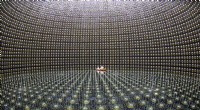
Neutrino physics is a significant focus at CERN. We study the properties and behavior of neutrinos, which are elusive subatomic particles that rarely interact with other matter.
By combining these elements and techniques, CERN's experiments contribute to our understanding of the universe's origins, the fundamental forces that shape it, and the nature of matter itself. Through record-precision measurements and the exploration of new physics, we continue to unravel the secrets of the cosmos and make significant discoveries that shape our knowledge of the universe.