Here are some key considerations related to the finiteness or infinity of the universe:
Observable Universe:
Our observations and measurements allow us to study a portion of the universe known as the observable universe, which is the region of space from which light has had enough time to reach us since the Big Bang. The observable universe is vast, containing billions of galaxies and celestial objects, but it only represents a tiny fraction of the entire universe.
Evidence for Finite Universe:
Some theories suggest that the universe could be finite. For example, the concept of a "closed universe" posits that the universe has a finite size and curvature, similar to the surface of a sphere. In such a scenario, the universe would eventually come back to itself if one were to travel far enough in any direction. However, this idea is largely speculative and lacks concrete observational evidence.
Evidence for Infinite Universe:
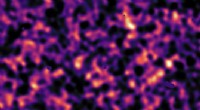
On the other hand, several observations and theoretical considerations support the notion of an infinite universe. One such observation is the apparent uniformity of the universe on a large scale. If the universe were finite, we might expect to observe irregularities or boundaries at some point, but observations suggest a remarkably consistent distribution of matter and energy throughout the observable universe.
Cosmic Inflation and Expansion:
The theory of cosmic inflation, which describes a rapid expansion phase in the early universe, also suggests that the universe may be infinite. During inflation, the universe would have expanded so rapidly that it effectively smoothed out any irregularities and created a vast, nearly uniform expanse. This expansion could potentially continue indefinitely, resulting in an infinite universe.
Curvature of Space-time:
The curvature of space-time is another factor that influences whether the universe is finite or infinite. If the universe has positive curvature, it is finite and will eventually collapse back on itself. However, if the curvature is negative or zero, the universe could be infinite. Current measurements indicate that the curvature of the universe is very close to zero, but its precise value remains uncertain.
Ultimately, the question of whether the universe is finite or infinite is still an open one. As we continue to make observations, collect data, and develop theories, our understanding of the cosmos evolves. It is possible that future advancements will provide more definitive answers to this fundamental question about the nature of our universe.