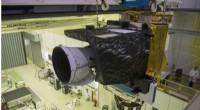
The key to MAD-IC's success is its ability to simultaneously image multiple objects in the sky. This allows the system to differentiate between the light coming from distant galaxies and the light coming from the Earth's atmosphere, which can blur images and make it difficult to observe faint objects.
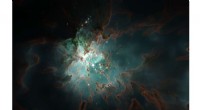
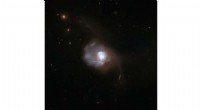
MAD-IC would be able to observe galaxies that are 10 to 100 times fainter than those that can be seen with existing ground-based telescopes. This would allow astronomers to study the early universe in much greater detail, providing new insights into the formation and evolution of galaxies.
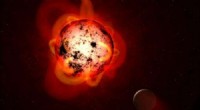
The system could also be used to search for exoplanets, or planets that orbit stars other than the sun. By blocking out the light from the host star, MAD-IC would be able to directly image exoplanets, providing information about their size, mass, and composition.
MAD-IC is a proposed project and is not currently in development. However, if it is built and successfully deployed, it could revolutionize our understanding of the universe.