Streaking across the night sky, shooting stars captivate our imaginations and evoke a sense of wonder. But what exactly are these celestial phenomena? Contrary to popular belief, shooting stars are not stars at all. They are actually tiny bits of space debris, known as meteoroids, entering Earth's atmosphere at high speeds.
The Journey of a Meteoroid
Meteoroids originate from various sources, including comets and asteroids. As these celestial objects travel through space, they shed small particles of rock and dust, which become meteoroids. These meteoroids range in size from minuscule grains to large boulders.
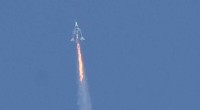
When a meteoroid enters Earth's atmosphere, it encounters tremendous friction and heat. This causes the meteoroid to glow brightly, creating the streak of light we see as a shooting star. The process is akin to a spacecraft re-entering Earth's atmosphere, where the friction from the air molecules makes the spacecraft heat up and emit light.
Meteor Showers and Fireballs
Under specific conditions, large numbers of meteoroids can enter Earth's atmosphere at the same time. This phenomenon is known as a meteor shower. During a meteor shower, hundreds or even thousands of shooting stars can be visible per hour. Some notable meteor showers include the Perseids, Geminids, and Leonids, each associated with a specific time of the year.
Occasionally, a particularly bright meteoroid can produce a fireball. Fireballs are extremely luminous shooting stars that may even cast shadows on the ground. They are caused by larger meteoroids or pieces of debris from comets or asteroids. Fireballs can disintegrate in the atmosphere, producing a spectacular explosion of light and sound.
Exploring Meteorites
In rare cases, meteoroids do not completely vaporize in the atmosphere and reach the Earth's surface. These objects are known as meteorites. Meteorites provide valuable insights into the origins and composition of our solar system, offering glimpses into the materials that formed the planets. Scientists study meteorites to unravel the history and evolution of the cosmos.
Witnessing the Spectacle
Observing shooting stars is an awe-inspiring experience. With a little planning and patience, anyone can enjoy this celestial spectacle. Clear skies, dark locations, and a comfortable viewing spot are key. Meteor showers are predictable events, so checking astronomical calendars can help plan your stargazing adventure.
Shooting stars serve as a reminder of our place in the vast universe and the constant cosmic symphony unfolding around us. They ignite curiosity and inspire us to explore the mysteries that lie beyond our planet.