> *The High-Resolution Imaging Science Experiment (HiRISE) camera aboard NASA's Mars Reconnaissance Orbiter (MRO) has been imaging the Red Planet for over 15 years, and it continues to produce stunning images that reveal the planet's diverse surface features.*
By: Nancy Atkinson, Universe Today
Published: Wednesday, August 3, 2022
The High-Resolution Imaging Science Experiment (HiRISE) camera aboard NASA's Mars Reconnaissance Orbiter (MRO) has been imaging the Red Planet for over 15 years, and it continues to produce stunning images that reveal the planet's diverse surface features.
The latest batch of images includes views of sand dunes, craters, and canyons, as well as a close-up of the Martian moon Phobos.
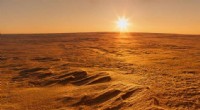
One of the most striking images shows a field of sand dunes near the Martian equator. The dunes are about 100 meters (328 feet) high and are covered in ripples that were created by the wind.
Another image shows a crater that is about 20 kilometers (12 miles) in diameter. The crater is located in the southern hemisphere of Mars and is surrounded by a series of concentric ridges.
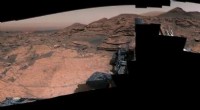
A third image shows a canyon that is about 50 kilometers (31 miles) wide and 1,000 meters (3,281 feet) deep. The canyon is located in the Valles Marineris, which is the largest canyon system in the solar system.
The final image in the batch shows a close-up of Phobos. Phobos is about 22 kilometers (14 miles) in diameter and is the larger of the two Martian moons. The image shows the moon's surface, which is covered in craters and ridges.
The images released this week are just a small sample of the vast amount of data that HiRISE has collected over the past 15 years. This data has helped scientists to better understand the geology, climate, and history of Mars.
The HiRISE camera is a powerful tool that is helping scientists to explore Mars in unprecedented detail. The images that it produces are a testament to the amazing capabilities of this instrument and to the dedication of the scientists and engineers who operate it.
Here are some additional details about the images:
* *The image of the sand dunes was taken on July 28, 2022, at a resolution of 0.5 meters (1.6 feet) per pixel.*
* *The image of the crater was taken on July 31, 2022, at a resolution of 1 meter (3.3 feet) per pixel.*
* *The image of the canyon was taken on July 27, 2022, at a resolution of 1 meter (3.3 feet) per pixel.*
* *The image of Phobos was taken on August 1, 2022, at a resolution of 0.25 meters (0.8 feet) per pixel.*