Two of the most important factors that affect star formation are the density of the gas and dust cloud, and the temperature of the gas. The denser the cloud, the more likely it is to collapse under its own gravity. The higher the temperature of the gas, the more energy it has to overcome the gravitational forces that are holding it together. Thus, star formation is most likely to occur in regions of high density and low temperature.
In addition to these two factors, the rate of star formation can also be influenced by other factors, such as the presence of magnetic fields, the rotation of the cloud, and the presence of heavy elements.
Cosmic dust and gas play a crucial role in star formation. The dust and gas provide the raw material from which stars form, and they also play a role in regulating the temperature and density of the gas cloud. Dust and gas can also absorb ultraviolet (UV) radiation from nearby stars, which can help to shield young stars from the harmful effects of this radiation.
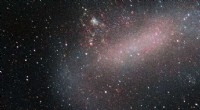
The presence of cosmic dust and gas is also thought to be responsible for the formation of spiral arms in galaxies. Spiral arms are long, winding lanes of stars, gas, and dust that extend from the center of a galaxy. It is thought that spiral arms are formed when density waves in the interstellar medium compress the gas and dust, triggering star formation.
Studies of cosmic dust and gas have provided valuable insights into the process of star formation. By understanding the role of dust and gas in star formation, astronomers have been able to develop more accurate models and simulations of this complex process. These models have helped us to understand how stars form and evolve, and how they contribute to the overall structure and evolution of galaxies.