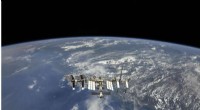
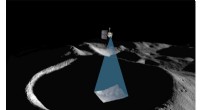
The Global Positioning System (GPS) is a global satellite-based navigation system that provides location and time information to receivers on Earth. It is a constellation of 31 satellites that orbit the Earth at an altitude of approximately 20,200 kilometers (12,550 miles). Each satellite transmits a unique signal that contains its own position and the time.
The signals are received by a GPS receiver, which calculates the distance to each satellite by measuring the time it takes for the signal to travel from the satellite to the receiver. The receiver then uses these distances to calculate its own position using a process called trilateration.
The GPS also provides accurate timing information. The satellites are equipped with atomic clocks that are synchronized with each other. This allows GPS receivers to receive precise time signals, which can be used to synchronize clocks or to provide time-based services such as navigation and weather forecasting.
Applications of GPS
The Global Positioning System has revolutionized the way we navigate. Today, GPS is used in a wide range of applications. Here are a few examples of how GPS is used:
* Navigation: GPS is used for navigation in cars, trucks, boats, and aircraft.
* Surveying: GPS is used by surveyors to measure distances, angles, and elevations.
* Mapping: GPS is used to create maps and to mark the locations of features such as roads, buildings, and landmarks.
* Tracking: GPS is used to track the movement of people, vehicles, and animals.
* Timing: GPS is used to synchronize clocks and to provide time-based services.
The Future of GPS
The GPS constellation is constantly being improved. New satellites are being launched to replace older satellites, and the signals that the satellites transmit are being updated to provide more accurate and reliable information.
In addition, neue technologies are being developed to enhance the capabilities of GPS receivers. For example, some receivers can now use the signals from multiple satellite constellations, such as GPS, GLONASS, andBeiDou. This improves the accuracy and reliability of the positioning information.
The GPS is a vital tool that has become an essential part of our modern world. As the technology continues to improve, we can expect to see even more applications for GPS in the future.